Short note on Object Relational Database.

 The object-relational database is an improved version of the object-oriented database. It provides a solution to the issues users face in object-oriented databases; some of these issues include the cost of computing resources, possibility of design errors, and data inconsistency. However, it is also important to note that the object-relational database is based on both the relational model and the object-oriented database model.
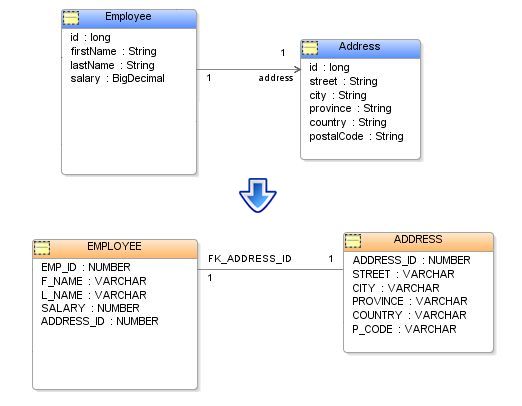

Furthermore, these databases support objects and inheritance and provide a better interface for many object-oriented languages. Users can also use data model extensions with custom data types and methods. Moreover, companies such as Microsoft, Oracle, and Sybase have object-relational versions of their products. These databases are more applicable for applications that consist of a large number of short-lived transactions on data items with complicated structures.


Comments

Popular posts from this blog

Short note on E-Government Architecture

Discuss classification or taxonomy of virtualization at different levels.

Suppose that a data warehouse for Big-University consists of the following four dimensions: student, course, semester, and instructor, and two measures count and avg_grade. When at the lowest conceptual level (e.g., for a given student, course, semester, and instructor combination), the avg_grade measure stores the actual course grade of the student. At higher conceptual levels, avg_grade stores the average grade for the given combination. a) Draw a snowflake schema diagram for the data warehouse. b) Starting with the base cuboid [student, course, semester, instructor], what specific OLAP operations (e.g., roll-up from semester to year) should one perform in order to list the average grade of CS courses for each BigUniversity student. c) If each dimension has five levels (including all), such as “student < major < status < university < all”, how many cuboids will this cube contain (including the base and apex cuboids)?